Connect this guide with the rest of your visit in the Kuala Lumpur trip planner. Read how the research is made and what its sources establish.
At a glance
Start here
- Start at Merdeka Square to establish the civic story.
- Use the river confluence and Masjid Jamek to read the city's geography.
- Finish with textiles, crafts and street commerce near Pasar Seni.
- Confirm current gallery access and transit notices before setting out.
01
Choose the rail anchor before the walking route
Masjid Jamek and Pasar Seni are useful anchors at opposite ends of this corridor. Starting near Masjid Jamek places the river junction and mosque first, followed by Merdeka Square; starting at Pasar Seni reverses the story and begins with market streets. Rapid KL's integrated map is the right place to confirm the current line and interchange pattern. Then open the operator's journey planner on the day, because a familiar map cannot show every service notice. Pick a direction based on your next commitment, not on an assumed universal route: end near Pasar Seni for Chinatown, or near Masjid Jamek for onward rail connections.
- Save the current Rapid KL map before leaving your accommodation.
- Check which station exit places you on the intended side of the road.
- Reverse the walk if the final district suits your evening plan better.
02
Read Merdeka Square as a civic landscape
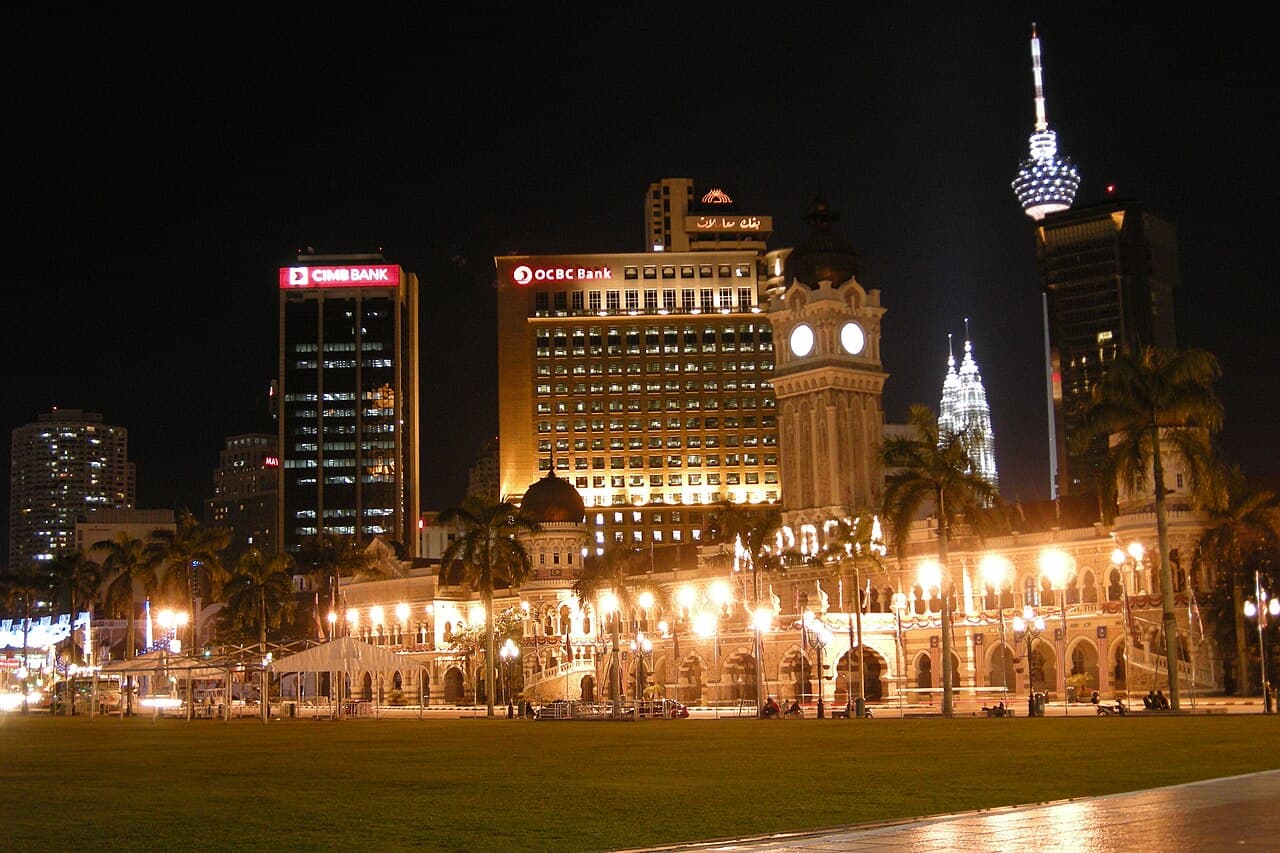
Merdeka Square is the clearest place to orient yourself before examining individual facades. The field, flagpole, Royal Selangor Club edge and Bangunan Sultan Abdul Samad together explain why this area became a stage for state ceremony. The official visitor page connects the square with the lowering of the Union Jack and the raising of the Federation of Malaya flag on the eve of 31 August 1957. Stand back far enough to compare the open field with the administrative frontage. That relationship matters more than collecting a photograph of each object in isolation, and it prepares you for the independence-focused landmarks elsewhere in the city.
- Use the square for the wide view before approaching the buildings.
- Separate the flag ceremony at the square from the proclamation at Stadium Merdeka.
- Check official notices if a national event changes public access.
03
Look beyond the clock tower at Bangunan Sultan Abdul Samad
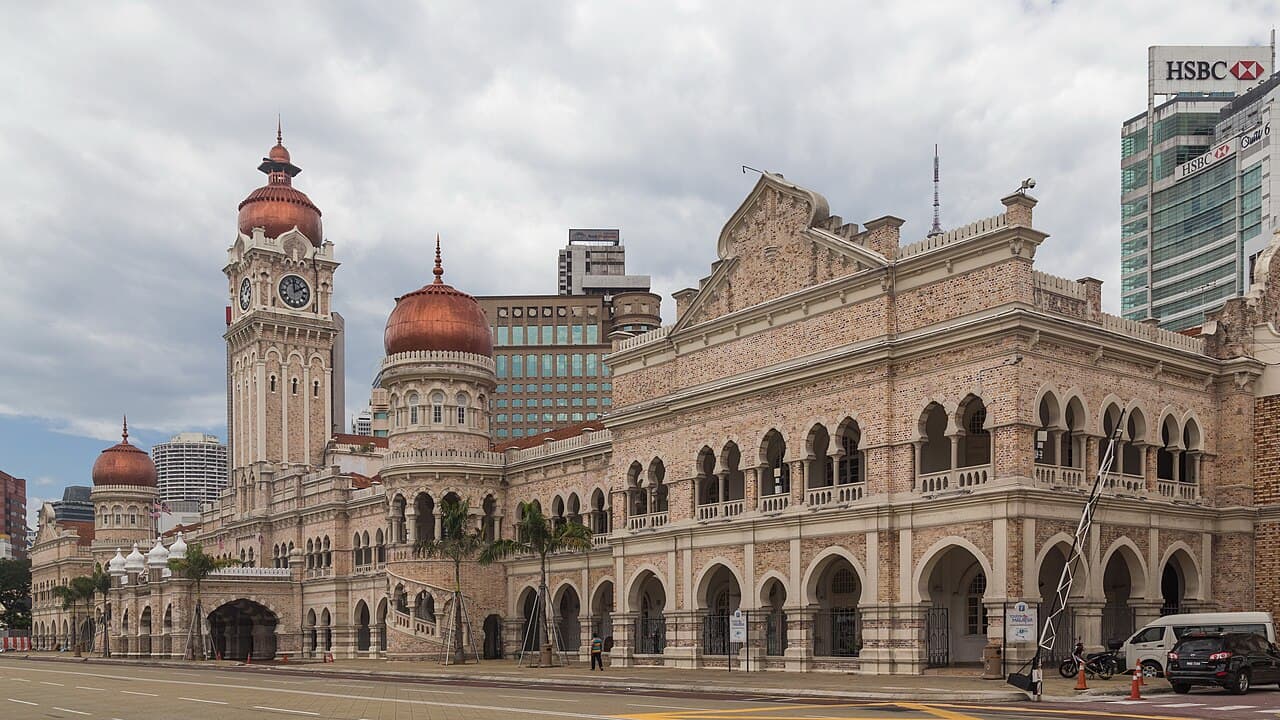
The restored Bangunan Sultan Abdul Samad now rewards a closer reading. Its official history says the 1897 building housed colonial administration and combines Mughal, Moorish and Gothic influences through the work of the Selangor Public Works Department team. The building later served government and court functions, so its meaning changed even while its facade remained a city emblem. Current public galleries and programmed spaces make the interior more accessible than it was for many years, but individual experiences may have their own entry arrangements. Consult the official complex page rather than assuming that every block, gallery or event shares the same access policy.
- Compare arches, copper domes and the central clock tower from the square.
- Read the official gallery listings before deciding how long to stay.
- Treat coming-soon spaces as unavailable until the operator confirms otherwise.
04
Use the river confluence to understand the street plan
Behind the civic frontage, the Klang and Gombak rivers meet beside Masjid Jamek. The River of Life heritage material treats this corridor as a connection between landmarks rather than leftover space behind them. From the public riverside, notice how bridges, rail infrastructure, mosque grounds and building backs compete for limited room. This is also a useful point to resist a simplified origin story: the confluence is central to Kuala Lumpur's early spatial growth, while the city's development involved many communities and settlements across a wider area. Read the waterway as urban structure, then use the dedicated river-confluence article for the fuller historical argument.
- Trace both river channels before moving toward the market district.
- Use public routes and follow any temporary access diversions.
- Do not treat lighting or fountain effects as guaranteed; check current project information.
05
See Masjid Jamek as a working mosque and landmark
Masjid Jamek Sultan Abdul Samad occupies the river junction and remains an active place of worship. Malaysia's official mosque directory records its South Asian Mughal influences, domes and minarets, and links its architect, A. B. Hubback, with Bangunan Sultan Abdul Samad. That visual relationship makes the mosque an important stop even if visitor access is limited during your walk. Check the mosque's current instructions and prayer-related access before entering, and accept staff direction on the day. A heritage route does not override the building's religious purpose; an exterior study from the public realm still reveals its site and architectural dialogue.
- Check current visitor information before planning an interior visit.
- Follow posted dress, photography and access instructions.
- Keep entrances and worshippers' routes clear.
06
Compare museum interpretation with a living craft market
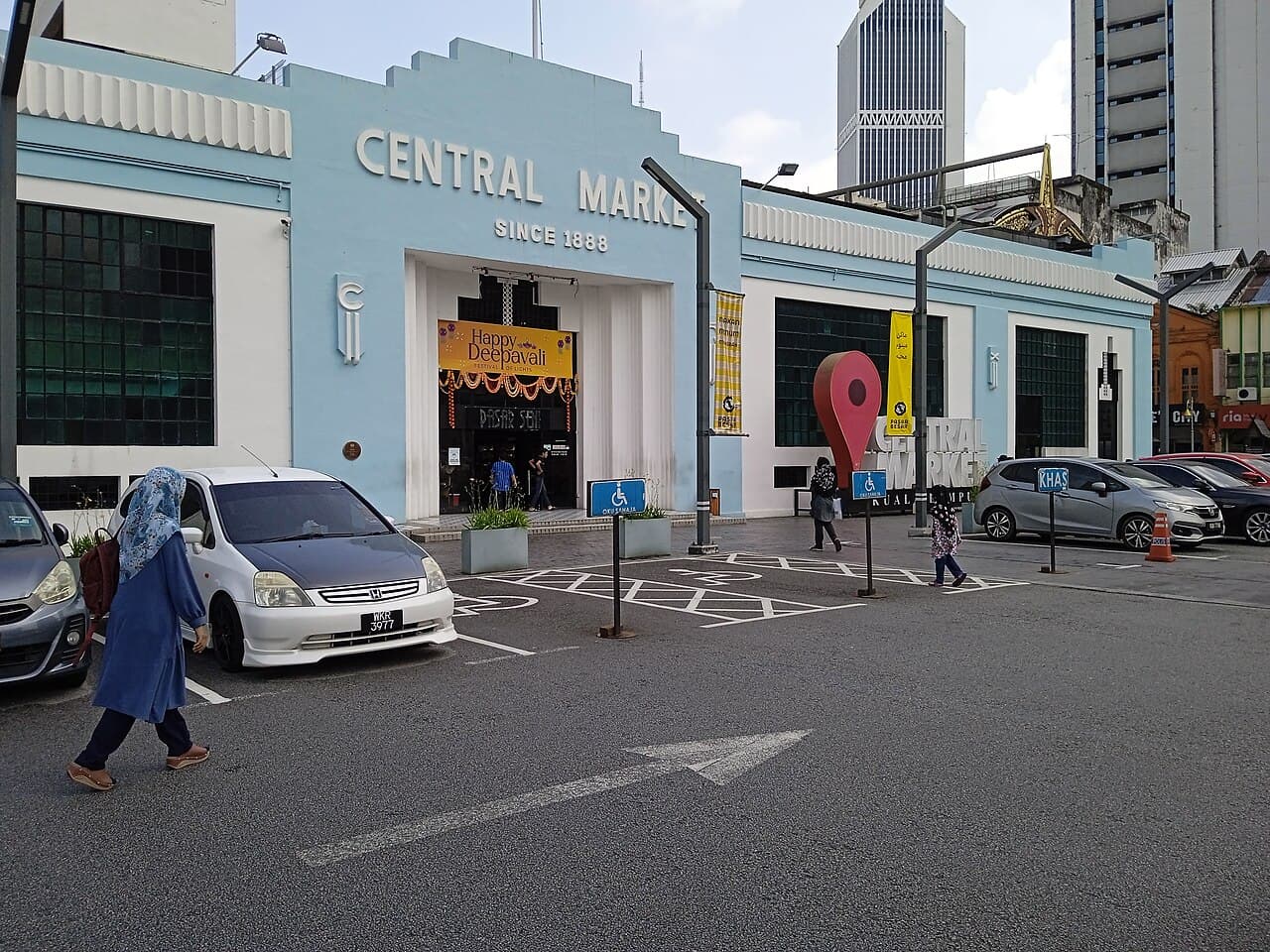
The National Textile Museum and Central Market offer two different ways to encounter material culture. The museum's official page explains techniques and collections across weaving, embroidery, batik, beadwork and regional textile traditions. Central Market, which began as a wet market in 1888, now presents Malaysian culture, art and craft through shops and programmed activity. Visit the museum first if you want vocabulary for what you later see for sale. Visit the market first if colour and objects will help you decide which museum galleries deserve more attention. Neither stop guarantees that every item is locally made, so ask sellers for material and origin details.
- Check the museum page for current gallery and admission information.
- Ask vendors specific questions about maker, technique and material.
- Use the separate craft trail for a deeper comparison with pewter and Islamic art.
07
Finish in Chinatown without turning streets into a checklist
From Central Market, continue into the commercial streets around Petaling Street only as far as your interests and energy justify. The River of Life heritage route places temples, market buildings and civic landmarks within the same broader corridor, but they represent different communities and functions. Choose one further stop to understand properly rather than rushing through every doorway. Religious buildings set their own visitor rules; businesses set their own opening patterns. The useful conclusion to this walk is the contrast between planned civic architecture and adaptable trading streets. Before returning, check Rapid KL for the best current departure station instead of retracing the route by habit.
- Choose one temple, market lane or gallery for a focused final stop.
- Follow each religious site's own visitor instructions.
- Recheck the official journey planner before the onward trip.
Useful answers
Reader questions
Where should a Kuala Lumpur heritage walk begin?
Begin near Masjid Jamek for the river-and-civic story, or near Pasar Seni for the market-and-Chinatown story. Both are logical rail anchors; use Rapid KL's current map and journey planner to choose the direction that fits your onward plans.
Sources: Prasarana Malaysia Berhad; Jabatan Wilayah PersekutuanCan visitors enter Bangunan Sultan Abdul Samad?
The restored complex includes public gallery and cultural uses, but individual spaces and exhibitions can have different arrangements. Check the official BSAS page for what is open and how admission works on your date.
Sources: Bangunan Sultan Abdul SamadIs Masjid Jamek only a historic attraction?
No. It is an active mosque as well as a major historic building at the river confluence. Any visit should follow current mosque instructions and respect worship-related access.
Sources: Jabatan Kemajuan Islam MalaysiaWhich stop explains Malaysian textiles best?
The National Textile Museum provides the structured explanation of techniques and traditions. Central Market is useful afterward for seeing how craft appears in a contemporary retail setting, while sellers should confirm the origin of individual products.
Sources: Department of Museums Malaysia; Central Market Sdn BhdRead the evidence
Sources and further reading
These sources support the relevant sections above. Plans and comparisons are editorial suggestions. Check operators for current arrangements.
- Bangunan Sultan Abdul Samad ↗Bangunan Sultan Abdul Samad · Research date 14 September 2026
Building history, architectural influences, completed conservation, current cultural uses and official visit-planning route.
- Merdeka Square ↗Kuala Lumpur Tourism Bureau · Research date 14 September 2026
Square layout, historical role and the independence-eve flag ceremony.
- Heritage Trails ↗Jabatan Wilayah Persekutuan · Research date 14 September 2026
Official heritage-corridor relationships among Merdeka Square, the textile museum, Masjid Jamek and nearby landmarks.
- Masjid Jamek Sultan Abdul Samad ↗Jabatan Kemajuan Islam Malaysia · Research date 14 September 2026
Mosque location, active religious role, architectural influences, domes, minarets and connection to A. B. Hubback.
- National Textile Museum ↗Department of Museums Malaysia · Research date 14 September 2026
Museum building, galleries, textile techniques and represented cultural traditions.
- Central Market Kuala Lumpur ↗Central Market Sdn Bhd · Research date 14 September 2026
Market origin in 1888, present culture-art-craft role and official visitor information.
- Rapid KL Integrated Transit Map ↗Prasarana Malaysia Berhad · Research date 14 September 2026
Current official network map used to choose rail anchors and interchanges.