
Day one: KLCC from park level to skyline
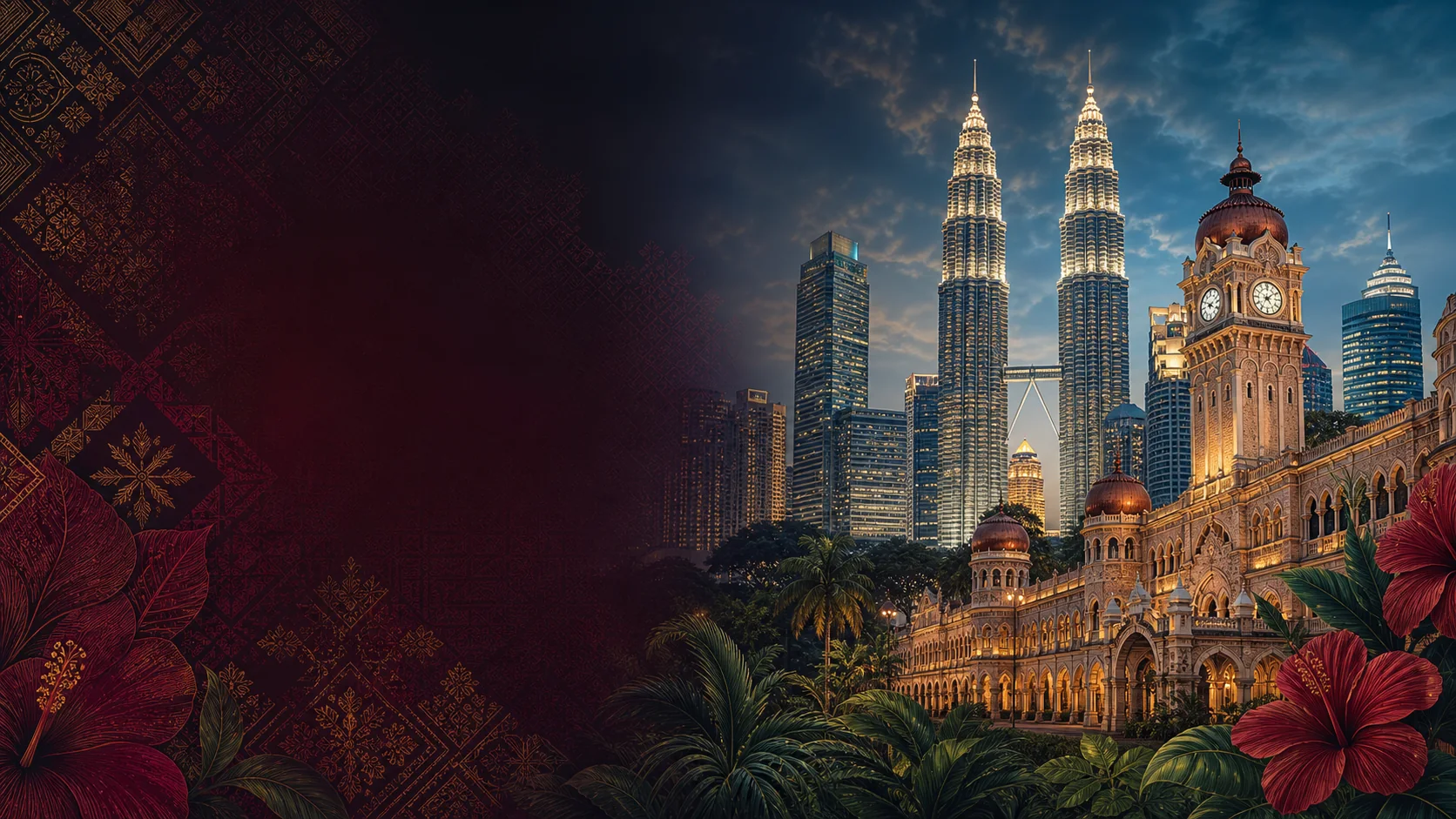
Start around KLCC Park and the Petronas Twin Towers, then use the connected city-centre area for an easy first day.
Walk the park before the strongest afternoon heat and use it to understand the scale of the KLCC district. The Petronas Twin Towers' official site publishes current ticket and visitor information, which matters if the observation experience is a priority. Book only through the official channel and arrive with enough time for its entry procedures rather than treating the towers as an unplanned walk-in.
Afterward, choose one indoor cultural stop or a relaxed meal instead of crossing the whole city. Kuala Lumpur rewards short transitions: a compact day leaves energy for evening city views and gives weather room if a shower interrupts the park. The Tourism Malaysia Kuala Lumpur guide is useful for selecting nearby attractions without creating a scattered route.
- Check the towers' official booking calendar.
- Carry water and sun protection for the park.
- Keep a nearby indoor alternative for rain.
Day two: civic history and cultural institutions
Use the second day for Merdeka Square, the Sultan Abdul Samad Building area, the National Mosque and one museum.
Begin early around Merdeka Square, where the open civic landscape is easier to read before heat and traffic build. Continue on foot only where crossings and pavements make sense; a short rail or bus transfer is better than forcing a direct line across multilane roads. Tourism Malaysia's official guide identifies the square and surrounding landmarks as a coherent heritage cluster.
At the National Mosque, remember that visitor access sits alongside worship. Dress modestly, follow staff directions and accept closures around prayer or religious activity. The nearby Islamic Arts Museum Malaysia offers an institution-led introduction to art across regions and periods; check its official site for current galleries and visitor arrangements. End around Central Market or Petaling Street, observing that one is a managed heritage market and the other a busy commercial street.
- Do not enter prayer areas without permission.
- Ask before photographing vendors or worshippers.
- Select one museum for depth rather than several rushed interiors.
Day three: Batu Caves plus a green finish
Visit Batu Caves early, then return to central Kuala Lumpur for Perdana Botanical Gardens or a missed cultural stop.
Tourism Malaysia describes Batu Caves as a Hindu temple complex reached by a long, colourful stairway and accessible by rail. Arrive as a respectful visitor: dress appropriately, keep food secured around monkeys, and never interrupt prayer or festival activity. The stair climb and tropical conditions justify an early start and a slower pace.
Return to the city before committing to the afternoon. If weather is stable, use Perdana Botanical Gardens for a quieter contrast; if rain is persistent, choose a museum or covered market. A flexible final block is more useful than a rigid attraction list because Kuala Lumpur's rainfall can be local and sudden.
- Wear secure shoes for the Batu Caves steps.
- Do not feed or approach monkeys.
- Check the rail journey in the official planner before departure.
Choose the right transport for each cluster
Use urban rail for longer links, walk within compact districts and use the official journey planner for mixed bus-and-rail routes.
Rapid KL publishes an integrated map covering LRT, MRT, monorail and related services, while its journey planner can compare mixed modes. Check live alerts before leaving because maintenance or operational changes can affect a memorised route. Station names and interchanges are more dependable planning anchors than estimating travel from a road map.
Walking is best inside KLCC, around the heritage core and within individual market districts, but not every apparent shortcut has a comfortable crossing. If rain is heavy, wait under proper shelter rather than walking beside fast traffic. For a tourist travel product, verify current eligibility and conditions on MyRapid instead of relying on an old price quoted by a blog.
- Save the official transit map offline.
- Check service alerts before each long transfer.
- Avoid planning back-to-back attractions across distant lines.
Make the itinerary work in tropical weather
Schedule exposed sights early, carry light rain protection and keep one substantial indoor option in every day's route.
Malaysia's meteorological department describes a climate with generally uniform temperatures, high humidity and abundant rainfall, with seasonal wind patterns influencing rain. That does not produce a guaranteed dry sightseeing month in Kuala Lumpur. Use the official forecast for daily decisions and treat a broad seasonal description as context, not a promise.
Light, breathable clothing is practical, but carry a layer or covering suitable for air-conditioned museums and religious visits. Protect electronics from rain and allow wet pavements to dry before rushing down steps. A short weather delay is easier to absorb when each day stays within one part of the city.
- Check METMalaysia rather than a long-range screenshot.
- Carry a compact umbrella and water-resistant bag.
- Move outdoor photography to the clearest part of the day.